Quick Answer
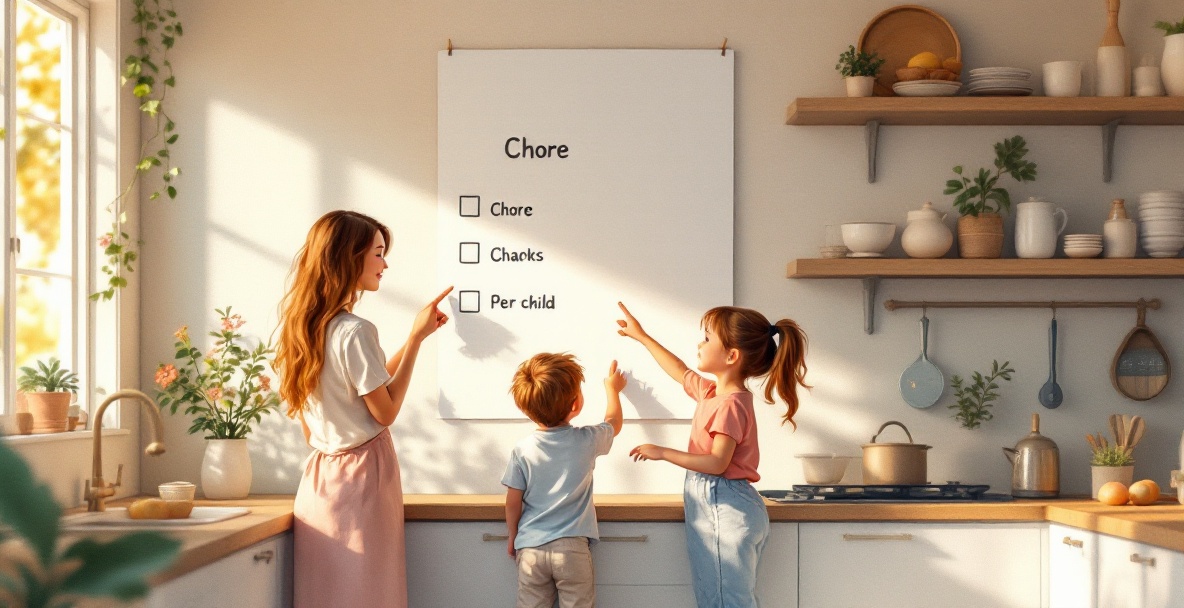
Positive reinforcement for kids means adding something a child values — attention, a privilege, a point, specific praise — right after a wanted behavior, so that behavior becomes more likely to repeat. Applied to chores, it means rewarding the effort behind a task, not just handing over a prize at the end. Done well, it fades out as the habit takes over; done poorly, it turns into a daily negotiation.
Key Takeaways
- Reward effort, not just the finished task
- Reward systems fail when they escalate, get removed abruptly, or reward compliance over growth
- Fade rewards gradually — habits should eventually run on their own
- Let kids help pick rewards; match style to age (visual for toddlers → autonomy for teens)
- Avoid punishment-framing, overpraise, sibling comparisons, food rewards
- Expect 8–12 weeks before rewards can fade out
If sticker charts, allowance bribes, and screen-time threats have all fizzled out within a few weeks, you've hit the wall most parents do: rewards only hold up when they're built around effort and consistency, not a prize handed over at the finish line. This guide covers what works past week two, what to avoid, and how the right approach changes as your child gets older.
Why Do Reward Charts Stop Working?
The typical chore reward system treats kids like employees: do the task, collect the prize. That works for a week or two, then breaks down in predictable ways.
- It kills intrinsic motivation. Kids start asking "what do I get?" before doing anything.
- It requires constant escalation. The reward that worked last month stops feeling exciting.
- It collapses when the reward stops. Remove the stickers and the chores usually stop too. A 2025 field study on digital rewards and children's motivation found that once an extrinsic reward is withdrawn, motivation can drop below where it started — a pattern researchers call motivation crowding.
- It focuses on compliance, not growth. Kids learn to game the system instead of building lasting responsibility.
The fix isn't removing rewards. It's using them differently.
What Are Effective Positive Reinforcement Techniques for Kids?
Here's how positive reinforcement works for kids once you move past the reward chart: five approaches that hold up over the long run.
1. Acknowledge Effort, Not Just Results
"I noticed you wiped the table without being asked" carries more weight than "good job." Specific, effort-based feedback tells kids their initiative matters, not just the outcome.
2. Use Natural Reinforcement
Connect the chore to a real-world benefit: "the kitchen's clear, so we can bake" or "your laundry's done, so you've got that shirt for tomorrow." This shows kids that chores create real value, not just points — a natural-consequence approach that works alongside, not instead of, points.
3. Fade Rewards Over Time
Start with tangible rewards — points, stickers, privileges — then step them back as the habit forms. The goal is for the behavior to become automatic, the way brushing teeth eventually does.
4. Celebrate Streaks and Consistency
"You've done your chores every day this week" acknowledges sustained effort and taps into a kid's competitiveness with themselves, not with a sibling.
5. Let Kids Help Set the Rewards
Ask what they'd like to earn. Systems built around a reward a child actually chose tend to last longer than ones a parent picked alone.
What Should You Avoid With Positive Reinforcement?
Skip these and undo the effect fast.
- Don't use chores as punishment. "You're grounded, go clean the garage" turns a chore into a penalty.
- Don't overpraise. "You're the best kid ever for making your bed" feels hollow. Keep it specific and real.
- Don't compare siblings. "Why can't you be more like your sister?" kills motivation faster than almost anything else.
- Don't reward yourself with food. Using sweets as chore payment builds an association most parents regret later.
If you'd rather sidestep the reward conversation some days, making chores fun for kids is often a faster route to cooperation than any point system.
What Does Positive Reinforcement Look Like by Age?
Good positive reinforcement examples for kids look different at every stage. The right style changes a lot between toddlerhood and the teen years.
| Age | Best Reinforcement Style |
|---|---|
| 2-4 | Immediate and visual — stickers, high-fives |
| 5-7 | Point systems, small privileges |
| 8-10 | Earning toward bigger goals — toys, outings |
| 11-13 | Money, screen time, social privileges |
| 14+ | Real autonomy and trust as the reward |
How Does KidKarma Use Positive Reinforcement for Chores?
KidKarma's point system is built directly on these principles: kids earn points for completed tasks, track streaks, and redeem points for rewards the family sets together.
- A points system that motivates without bribing
- Streak tracking for sustained habits
- Custom rewards each child picks
- A system designed to fade into intrinsic motivation over time
If you're not sure which chores fit your child's stage yet, the elementary chore guide breaks down age-appropriate tasks before you start assigning points.
Final Thoughts
Positive reinforcement for chores isn't about finding the perfect reward — it's about pairing consistent acknowledgment with rewards that shrink over time. Start with one or two techniques from this list, stay consistent for a few weeks, and the system starts running on its own.