Quick Answer: An ADHD reward system pairs a specific task with an immediate, visible reward, so the payoff arrives while your child still connects it to the effort. Token systems work because points are earned and redeemed right away, not at the end of the week. The structure matters more than the size of the reward.
An ADHD reward system is a planned structure that pairs a specific task with an immediate, visible reward, so the payoff arrives while your child still connects it to the effort. Token systems work because points are earned and redeemed right away, not at the end of the week. The structure matters more than the size of the reward.
Most parents set one up after a hard week of repeating themselves. The system itself is simple. Keeping it running is the part that needs a plan.
What Is an ADHD Reward System?
An ADHD reward system is a pre-agreed set of tasks, points, and rewards that runs the same way every day, with feedback delivered as close to the behavior as possible. Kids earn points for completing tasks, unlock rewards, and build positive habits while parents stay organized and connected.
It differs from bribery in one clear way: the terms are set before the task, not negotiated during a meltdown. A reward system is proactive and predictable. Bribery is reactive and gets more expensive each time you use it.
For a first-time setup, keep three parts: the task list, the point value of each task, and the reward menu. Everything else is decoration. If you are comparing how different apps handle those three parts, the Kidkarma vs Familyrewards guide walks through the differences side by side.
Why ADHD Brains Need Immediate, Visible Rewards
ADHD brains respond to immediate reinforcement far more strongly than to delayed payoff, which is why a reward promised on Friday rarely changes behavior on Tuesday. The gap between effort and outcome is what breaks the loop.
A token-economy behavior program produced an effect size of 0.74 across problem-behavior categories, per a Frontiers in Psychiatry study (2015), a result researchers describe as clinically meaningful. Timing, not reward size, is the variable that matters most.
That is why a delayed reward loses its pull faster for a child with ADHD than for a neurotypical sibling. Shortening the time between the behavior and the reward does more than making the reward bigger. Breaking a large task into smaller reward-eligible steps helps too. For a fuller breakdown of what holds up over time, see reward systems for kids that actually work.
Research Highlight: The edgefoundation.org overview of stimulation and rewards in the ADHD brain explains why immediate feedback registers differently, which is the same reason a points system beats a promise.
How a Token System Works for ADHD Kids
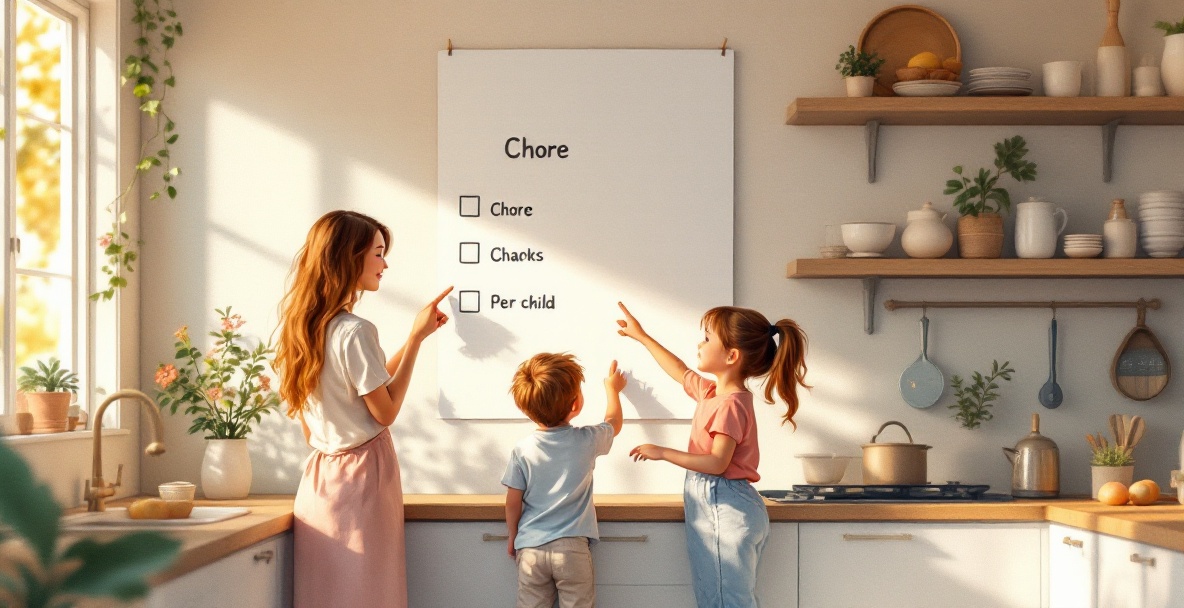
A token system for ADHD kids turns effort into points the child can see, then lets those points buy something they chose. The loop has four steps: a task appears, the child completes it, a parent approves it, and points land in the account.
KidKarma handles each step. Task creation sets up the chore list once. Task completion approval lets you confirm the work with one tap. Point tracking shows the running total, and reward redemption lets your child spend points on a reward they picked earlier.
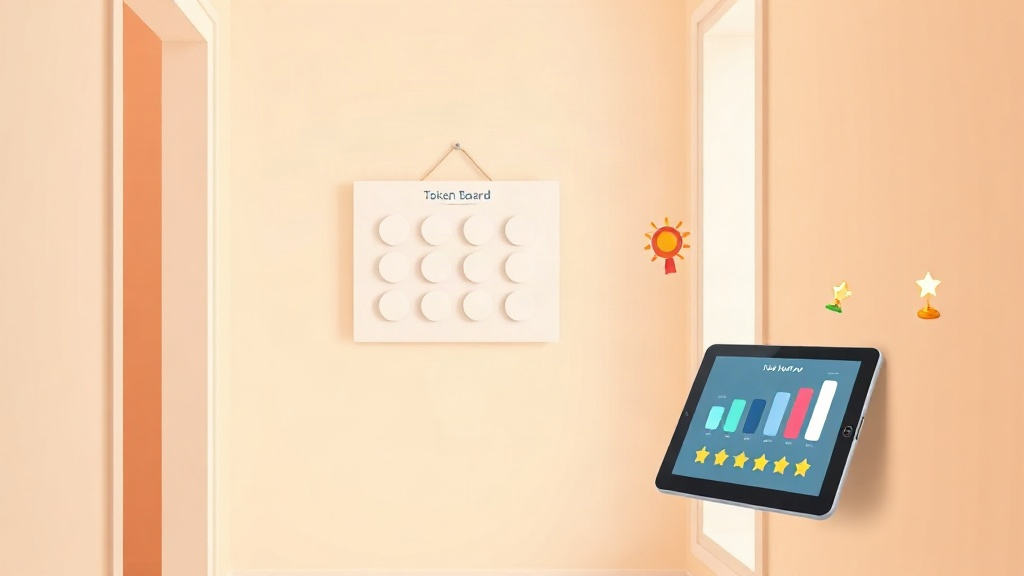
A few features matter more for ADHD households than for others. QR kid login means your child signs in without typing a password. Custom avatars and a kid-friendly interface keep the app usable without help. Smart reminders nudge once instead of nagging. Progress charts show the streak building, which is often the part that keeps a child going.
Pro Tip: Approve tasks the moment they are done, not in a batch at bedtime. The delay is what breaks the habit loop, not the point value.
Setting Up a Reward System That Actually Sticks
A reward system sticks when the tasks are small, the points are simple, and the rewards are chosen by the child. Most setups fail in the first week for one of three fixable reasons.
Picking Tasks and Point Values
Start with three to five tasks per child, not ten. Use a simple scale: quick daily tasks earn 1 point, medium tasks earn 2 points, and weekly or bigger tasks earn 3 to 5 points. Write tasks specifically. "Make bed, pick up floor, put clothes away" works better than "clean your room."
Choosing Rewards Kids Care About
Ask each child to build their own reward menu. The rewards you find motivating may not match what they want. Set tiers so progress feels reachable: 10 points for extra screen time, 25 points for choosing Friday dinner, 50 points for a small outing, 100 points for something bigger.
Avoiding the Most Common Pitfalls
Two mistakes sink most systems. The first is too many rules at once, which overwhelms a child who already struggles with multi-step instructions. The second is a delayed reward, which loses its pull within days. Review the setup monthly, because what works in January may not work in April.
Watch Out: If you find yourself raising the reward mid-tantrum, the system has slipped into bribery. Reset the terms when everyone is calm, not in the moment.
For more on pairing praise with points, see how to reward good behaviour in kids. If the mental load of running the whole household is the real problem, a family organization app can help balance it.
Reward Charts Vs. Apps: Why Format Matters for ADHD
An app keeps the system visible and consistent in a way a paper chart usually cannot, which matters more for ADHD kids than for others. A paper chart works until it falls off the fridge, gets lost, or lives at the other parent's house.
| Feature | Paper chart | App |
|---|---|---|
| Points update | By hand, once a day | Instantly on approval |
| Two homes | Chart travels or gets duplicated | Two-home sync on every plan |
| Co-parent visibility | One parent usually runs it | Co-parent sync, shared dashboard |
| Progress history | Erased when the chart is replaced | Progress charts keep the record |
| Reminders | Parent remembers | Smart reminders |
Co-parents share one dashboard and both get approval notifications, included on every plan, Plus or Family, monthly or yearly. That matters when a reward earned at one home needs to count at the other. For a wider comparison, see the best chore and allowance apps for kids and the best ADHD chore apps for kids.
KidKarma gives kids the list. You stop repeating yourself. The app runs no ads and sells no data, so subscriptions are what keep the lights on. Plans start at $4.99/month or $29.99/year after your free trial, and the Family plan is $7.99/month or $49.99/year (save 47%).
The 14-day free trial requires a card, and you won't be charged if you cancel before the trial ends. A reminder lands on day 11, four days before your trial ends.
One reviewer put it simply: "UI is clean; my daughter loves the colors. Customizable tasks, penalties, rewards with points." Another noted the app "keeps kids motivated to achieve daily routine activities on schedule and by themselves." Start your 14-day free trial and build the first task list today.