Quick Answer: Reward chores work when a task is completed, a parent approves it, points are awarded, and the child redeems those points for a reward they chose in advance. The loop only sticks if points have consistent values, rewards are kid-picked, and progress is visible over time.
A reward-chores system only works when four steps connect into one loop: task, approval, points, redemption. Skip the approval step and points feel random. Skip redemption and points feel pointless. The rest of this article walks through how that loop runs in practice, including across two homes.
How a Reward Chores System Actually Works
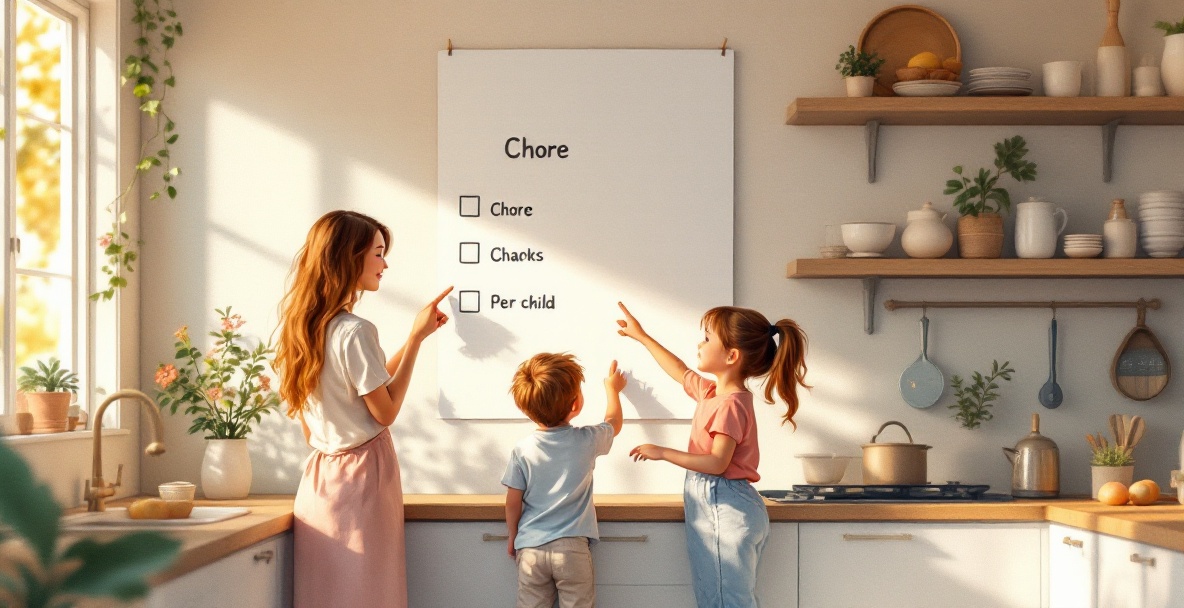
A reward chores system runs on a simple loop: a parent assigns a task, a child completes it, a parent approves it, and points are added to the child's total. Those points later get redeemed for a reward the child picked.
The approval step matters more than most parents expect. Without it, a child could mark anything "done" and the point total means nothing. KidKarma's version of this loop is built so "kids earn points for completing tasks, unlock rewards, and build positive habits while parents stay organized and connected."
- Task created: parent assigns a specific chore, not a vague instruction
- Task completed: child marks it done
- Task approved: parent confirms it was actually done
- Points awarded: a fixed value lands on the child's total
- Reward redeemed: child trades saved points for something they chose
For families comparing how different apps handle this loop, see this Kidkarma vs Familyrewards comparison.
Choosing Good Chore Rewards by Age
Good chore rewards change by age because what motivates a 4-year-old rarely motivates a 14-year-old. A sticker or small toy works early on; privileges and choice work later.
Rewards for Younger Kids (ages 2-6)
Younger kids respond to fast, tangible feedback. A small toy, a sticker, or a trip for ice cream lands better than a promise of something next month. Keep the gap between task and reward short at this age.
Rewards for Older Kids and Teens
Older kids and teens respond better to privileges than objects: extra screen time, choosing Friday dinner, a later bedtime, or a bigger outing once enough points build up. Letting kids build their own reward menu matters at every age, since the reward a parent assumes is motivating often isn't the one the child wants.
For a deeper breakdown of paid versus unpaid tasks by age, see pros and cons of getting paid for chores. Parents of tweens can also check chores for 11 year olds for age-specific task ideas.
Points, Charts, and Redemption: Making Chores Rewards Stick
Chores rewards stick when points track reliably and progress is visible, not just promised. A points total that updates after every approved task gives a child real-time feedback instead of a vague "good job."
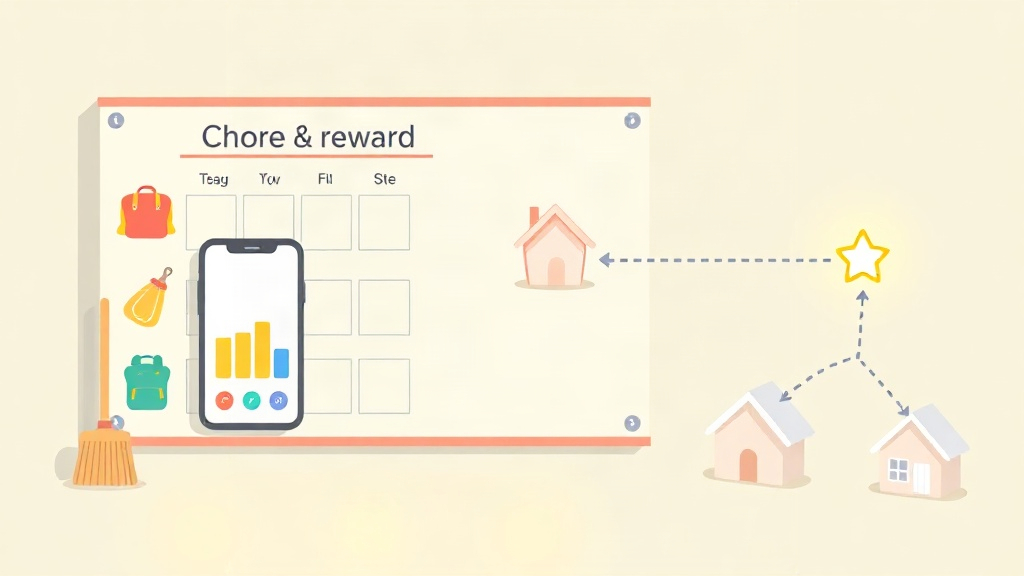
Progress charts are the piece that keeps chores rewards from fading after the first week. They show trends, like which chores get skipped on Tuesdays, so a parent can adjust before frustration builds.
Did You Know?: One Google Play reviewer wrote, "UI is clean; my daughter loves the colors. Customizable tasks, penalties, rewards with points," pointing to the chart and point visuals as part of what keeps kids engaged.
Another reviewer summed up the daily effect: "Good app which keeps kids motivated to achieve daily routine activities on schedule and by themselves." That's the goal of the full loop, not just the chart.
See the KidKarma app for how points, charts, and redemption fit together, or read reward systems that actually work for the five-step build process.
What Are Some Good Rewards for Chores for Teenagers?
Good rewards for teenagers are mostly privilege-based, not toy-based. Extra screen time, a later curfew, picking a weekend activity, or saving points toward something bigger all work better than small objects at this age.
A points-based system also gives teens flexibility: they redeem on their own schedule once enough points are saved, instead of waiting on a parent to remember a promise.
What Is a Good Points System for Kids' Chores?
A good points system assigns a consistent value to each task, requires parent approval before points are counted, and lets kids redeem points for a reward they chose themselves. Without approval, points stop meaning anything.
This matches how KidKarma describes its own loop: "Kids earn points for completing tasks, unlock rewards, and build positive habits while parents stay organized and connected." The structure stays the same whether the task is daily (quick, low points) or weekly (bigger, higher points).
Pro Tip: Review point values and rewards monthly. What motivates a child in January often stops working by spring as attention spans and interests shift.
For a sample points-plus-chart layout, see the family chore schedule template.
How Can I Track My Child's Progress on Chores?
Progress charts are the most direct way to track a child's chore completion over time. A chart shows not just today's status but trends across weeks, like which chores get done consistently and which ones stall.
That trend data is what helps a parent catch a problem early, before a single missed chore turns into a pattern. Progress charts are built into KidKarma as a core capability, so completion history is visible without manual logging.
How Can I Motivate My Child to Do Chores?
Motivation improves when chores work like a quick-feedback game instead of a vague request. Points that update immediately and a reward the child picked themselves both shorten the gap between effort and payoff.
The bigger daily motivation killer for most parents isn't the child, it's the repetition. As KidKarma puts it: "KidKarma gives kids the list. You stop repeating yourself." A visible task list removes the need to ask four times.
Read positive reinforcement for kids' chores for more on fading rewards over time as habits form.
How Do Co-Parents Share Chores and Rewards Across Two Homes?
Co-parents need one shared system so a child's chores and point totals stay the same whether they're at one home or the other. Without that, points reset or rules conflict depending on which house a child is in.
KidKarma handles this with built-in co-parent sync: "Co-parents share one dashboard and both get approval notifications. Included on every plan, Plus or Family, monthly or yearly." Both parents see the same task list and the same point total, no matter where the child is that week.
Compare how other apps handle two-home tracking in best chore and allowance apps for kids.
KidKarma runs no ads and sells no data, so subscriptions fund the app rather than advertising. Plans start at $4.99/month or $29.99/year after a 14-day free trial, card required, every feature included; you won't be charged if you cancel before the trial ends.
The Family plan runs $7.99/month or $49.99/year, a 47% saving over monthly. If reward chores feel like the right approach for your family, start the KidKarma free trial and see the full loop in action.