Quick Answer: A working teenager reward plan uses a clear point value per task, a tiered reward menu teens actually want, and a consistent approval process. Paper charts work until two homes or multiple kids are involved; at that point syncing rules and points across parents becomes the hard part.
Most lists of teen reward ideas skip the structure that makes a plan hold up past week two. A real plan needs point values, redemption tiers, and a way to approve work consistently, especially if your teen splits time between two homes.
Why Teen Reward Plans Need a Different Structure Than Kid Charts
A sticker chart works for a six year old because the reward is immediate and visual. Teens need something closer to a contract: defined responsibilities, defined consequences, and rewards that feel earned rather than handed out.
Younger kids respond to stars and praise. Teens respond to structure with real stakes attached, like tying chores to car use or phone plans. Weekly check-ins work better than daily reminders, since teens want room to self-manage rather than be nagged.
Natural consequences also do more teaching than a point deduction alone. If a teen skips their assigned cooking night, the family ordering in and charging it to their allowance teaches the lesson faster than a lecture. For a full breakdown of this approach, see chore systems that actually work for teens.
How to Build a Teenager Reward Plan
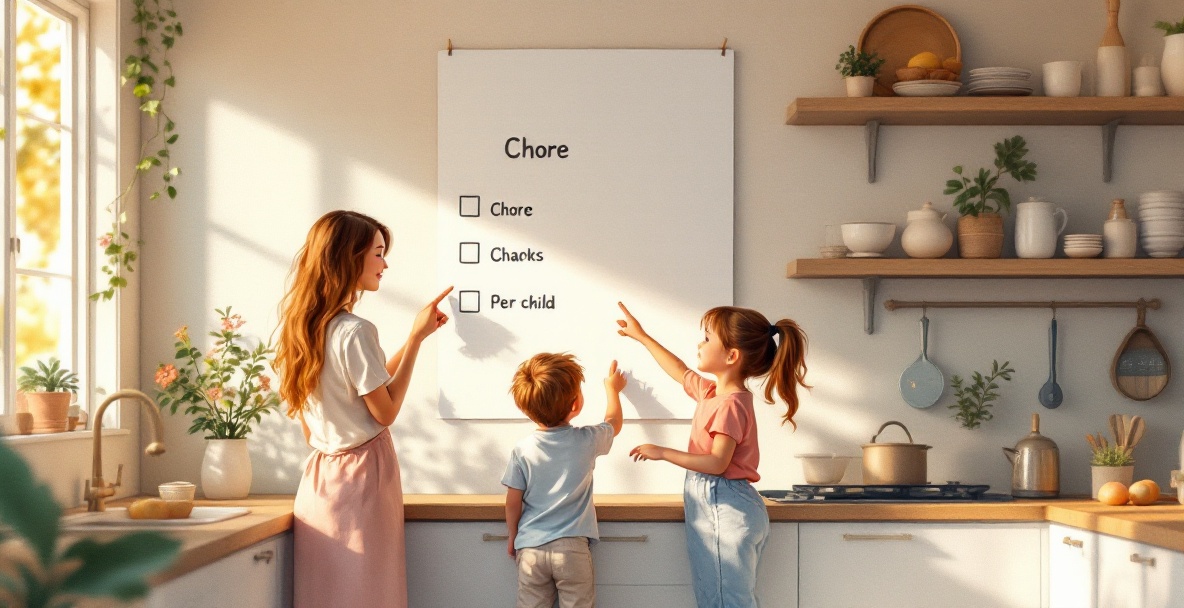
Building a teenager reward plan starts with listing tasks, then assigning points, then setting tiers, then deciding who approves completed work. Skipping any one of these steps is why most plans fall apart by month two.
Here is the framework:
- List every task. Be specific: "clean the kitchen" should mean dishes done, counters wiped, trash taken out.
- Assign a point value to each task, based on time and effort.
- Set reward tiers teens can see in advance, not ones you improvise later.
- Decide who approves completed tasks. One parent, both parents, or a rotating check.
- Review monthly. A plan that worked in September may need new tasks or rewards by December.
If you're also weighing whether an app or a spreadsheet handles this better, the KidKarma vs FamilyRewards comparison walks through how two systems manage the same five steps differently.
Setting Point Values for Teen-Level Tasks
Teen-level tasks carry more weight than younger kids' chores, so point values should scale with effort and time, not just frequency. A quick daily task like loading the dishwasher might be worth less than a weekly task like mowing the lawn or deep-cleaning a bathroom.
A reasonable scale:
- Quick daily tasks: 1 point
- Medium tasks (vacuuming, laundry): 2 points
- Weekly or bigger responsibilities (yard work, meal prep): 3-5 points
For a concrete list of age-matched chores and typical pay, see chores for 13 year olds, which also covers the $1-per-year-of-age allowance guideline that puts a 13 year old around $13 a week.
Choosing Redemption Tiers Teens Actually Want
Redemption tiers should be built by the teen, not guessed at by the parent. What motivates a ten year old (a toy, a sticker) rarely motivates a fifteen year old.
Reasonable tiers for a teen might look like:
- 10 points: extra 30 minutes of screen time
- 25 points: pick the Friday night dinner
- 50 points: a later curfew for one weekend
- 100 points: cash toward something they're saving for
Ask your teen to help build this list. A reward menu someone else chose for you rarely feels worth earning. For more on separating rewards from bribery, see reward systems that actually work.
Reality Check: If you're upping the reward mid-argument because the first one didn't land, that's bribery, not a reward system. A reward system sets the terms before the task starts.
Running the Plan Across Two Homes
Running a teenager reward plan across two homes requires one shared record of tasks and points, not two separate charts that drift out of sync. Without a shared system, a teen can finish a chore at one house and have no proof of it at the other.
Kids earn points for completing tasks, unlock rewards, and build positive habits while parents stay organized and connected. That only works if both parents see the same point total and the same approval history.
Co-parents share one dashboard and both get approval notifications, included on every plan, Plus or Family, monthly or yearly. That means a chore completed at one home shows up for the other parent to approve too, without a phone call or a screenshot.
Did You Know?: The two-home setup covers two parents or guardians and everything needed to run chores and rewards, in one home or two, with unlimited kids, tasks, and rewards on every plan.
This removes the back-and-forth texting that usually breaks down a shared chore plan. See the KidKarma homepage for how the dashboard and approval flow work together.
Paper Chart Vs. App: What Changes When You Automate the Plan
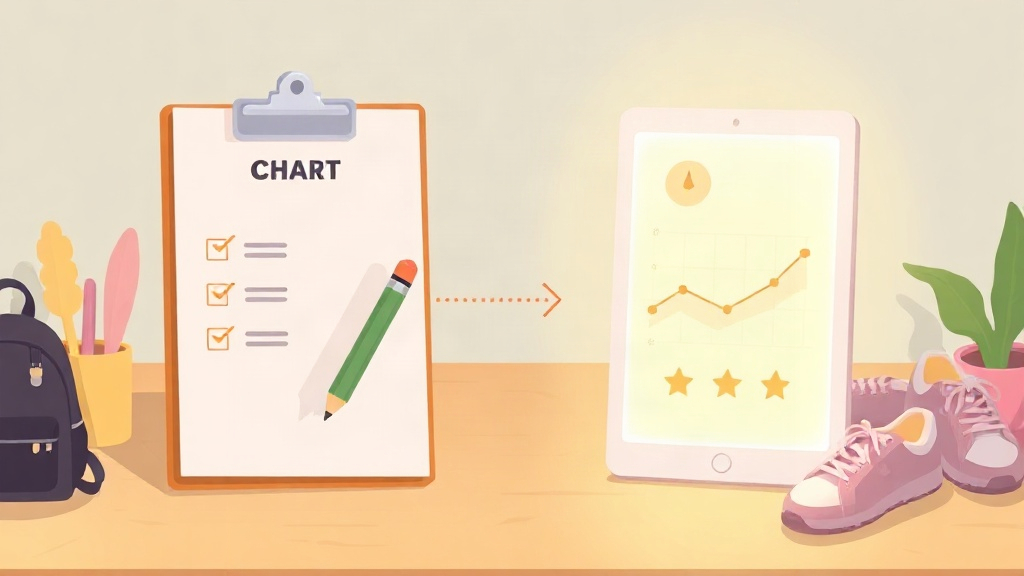
A paper chart tracks what a teen did; an app tracks who approved it, when, and whether both parents saw the same version. The difference matters most once a second household or a second kid enters the picture.
| Feature | Paper Chart | App |
|---|---|---|
| Point tracking | Manual, easy to lose | Automatic, saved per task |
| Co-parent visibility | Requires a photo or call | Shared dashboard, both parents notified |
| Reward redemption | Tracked by memory or tally | Logged and redeemable in-app |
| Consistency across homes | Depends on both parents updating it | One record, same rules everywhere |
| Data and ads | None collected | No ads and no selling of data |
KidKarma gives kids the list. You stop repeating yourself, since the task list and point balance live in one place both parents can check.
No ads, no spying, children's accounts fully managed by parents, no data sharing with third parties, and minimal data collection round out what changes once a plan moves off paper. For a wider look at how different apps handle this for teens specifically, see best chore apps for teens and tweens or the broader chore and allowance app comparison.
What a Teenager Reward Plan Costs to Run
A teenager reward plan costs nothing to design on paper, and starts at $4.99/month or $29.99/year after a free trial if you move it into an app. The free KidKarma chore chart maker lets you build and print a point-based chart at no cost before deciding whether to automate it.
If you do switch, KidKarma offers a 14-day free trial, card required. You won't be charged if you cancel before the trial ends. A reminder lands on day 11, four days before your trial ends, and you can cancel anytime in your App Store or Google Play subscription settings before the trial ends.
Pro Tip: Plans start at $4.99/month or $29.99/year after the trial, while the Family plan runs $7.99/month or $49.99/year, a 47% savings over paying monthly.
One Google Play reviewer summed up the day-to-day experience: "UI is clean; my daughter loves the colors. Customizable tasks, penalties, rewards with points." Research on teen self-control also backs the structure behind this kind of plan; see this guide on rules, rewards, and repercussions for teens for more on why consistency matters more than the size of the reward.
Ready to move your plan off paper? Start with the KidKarma vs FamilyRewards comparison to see which system fits your household.